You’ve noticed it… The meltdown after the birthday party. The crash after the juice box. The afternoon when nothing works, no matter what you try.
You’re not imagining things.
A 2024 study scanned the brains of nearly 30,000 people and found something that stopped me in my tracks: high consumption of ultra-processed foods causes structural changes in the brain, specifically in the regions that control emotions, cravings, and impulse regulation.
For a neurodivergent child already navigating those exact challenges, that’s not a small thing.
What counts as ultra-processed?
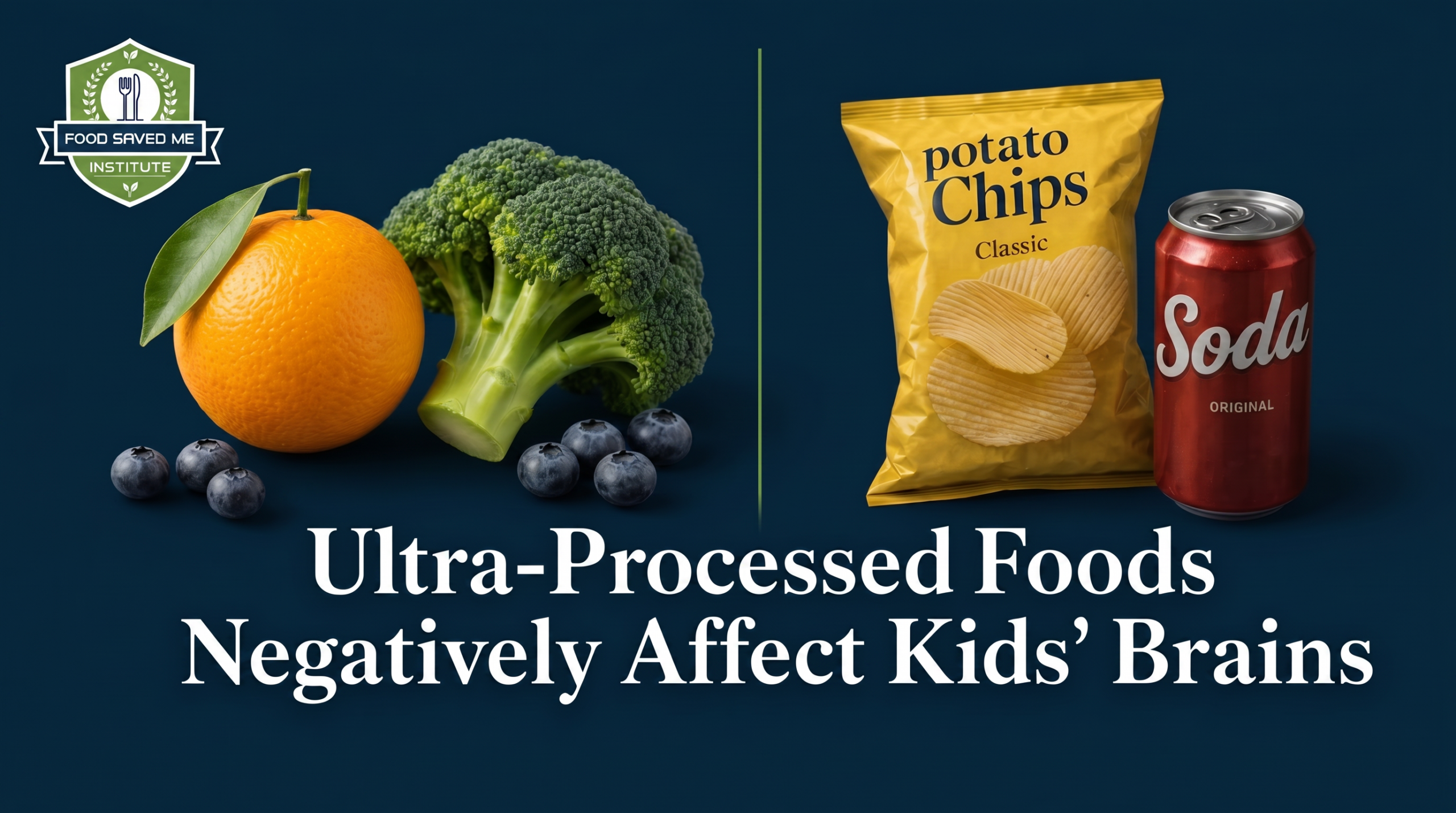
We’re not just talking about chips and soda. Think chicken nuggets, flavored yogurts, juice boxes, boxed mac and cheese, most packaged cereals, and processed lunch meats. Research shows these foods make up about 70% of what American kids eat every day.
There are two core problems with them.
First, they’re stripped of everything the brain actually needs, like fiber, vitamins, minerals, and antioxidants. The good stuff our kids need to focus, regulate, and stay calm is just not there.
Second, they introduce things that actively work against the brain: artificial dyes linked to hyperactivity, emulsifiers that disrupt the gut microbiome, added sugars that spike and crash dopamine, and saturated fats tied to inflammation.
One study found that just five days of eating ultra-processed foods was enough to impair insulin signaling in the brain, disrupting how it manages energy and appetite.
Why this hits ND brains harder
Children with ADHD and autism are already dealing with higher oxidative stress, gut-brain imbalances, and neurotransmitter challenges. Their brains need more nutritional support, not less.
Ultra-processed foods deliver the opposite.
I’ve watched this play out in my own family. When my son’s diet shifted toward whole, real foods, I started seeing a different kid, calmer, more connected, more himself. The science finally caught up to what I was witnessing in my own kitchen.
This isn’t about perfection
I know how hard this is. Sometimes your child will only eat five things. Sometimes survival mode is the only mode available. I’ve been there too.
This isn’t about overhauling everything overnight. It’s about understanding why these foods matter because that knowledge is what makes even one small swap feel worth it.
Add before you subtract. Swap one juice box for fruit-infused water. Toss a handful of berries into breakfast. Blend some spinach into a smoothie they already love.
Small steps, done consistently, change everything.
Katherine Lawrence is a Stanford-trained nutritionist, Board-Certified Autism Specialist, and founder of Food Saved Me Institute.
Sources:
- Kanyamibwa, A., et al. (2024). Nature Communications Medicine.
- Zhang et al. (2021). Children’s ultra-processed food intake data.
- Buch, A., et al. (2024). Nature Metabolism.
- Chassaing, B., et al. (2022). PMC.
- NIH News in Health (2024). Dejunking Your Diet.
- Harvard Health (2015). Nutritional Psychiatry: Your Brain on Food.