If your child with autism spectrum disorder is struggling with mood swings, emotional outbursts, or difficulty focusing, protein might be one of the last things on your mind. But it probably should be one of the first.
At the Food Saved Me Institute, we translate nutrition research into practical guidance for families raising children with autism. And one of the most consistent findings? Protein is often under-prioritized — and when it’s missing or imbalanced, kids pay for it in ways that look a lot like behavioral challenges.
This post breaks down what protein actually does for kids with autism spectrum disorder, how much they need, and which sources best support the brain and gut.
Please note: this content is for educational purposes only and is not intended as medical or nutritional advice. Always consult your doctor before making major changes to your child’s diet.
What Protein Actually Does for Kids with Autism
Most of us hear “protein” and think muscles. But protein is a macronutrient made up of amino acids — the fundamental building blocks of life. Our bodies require 20 different amino acids, and nine of them are essential, meaning we can only get them from food. Every single cell depends on them.
For children with autism spectrum disorder, protein supports four key areas:
Brain and neurotransmitter production. Dopamine — the neurotransmitter most tied to focus, motivation, and emotional regulation — is made from amino acids found in protein. So is serotonin, which governs mood stability, anxiety, and sleep. When kids with ASD don’t have enough amino acids available, their brains simply can’t produce adequate amounts of these chemicals. The result can look like more meltdowns, more hyperactivity, and disrupted sleep — not because of behavior, but because of biochemistry.
Structural support and physical stability. Many children with autism struggle with low muscle tone, motor coordination challenges, or joint instability. Proteins like collagen and elastin contribute to the physical structure that helps children feel grounded and move with confidence in everyday activities.
Immune defense. Antibodies — the proteins that fight infection — are built from dietary protein. Children with ASD who already have gut sensitivities or immune challenges are particularly vulnerable when protein intake is low.
Growth and repair. Growing children are constantly rebuilding muscle, skin, and cells. Without adequate protein, this process slows down, leading to fatigue and slower recovery.
How Much Do Kids with Autism Actually Need?
For children, the general recommendation is 13 to 34 grams of protein per day, depending on age and activity level. For context, a 150-pound adult needs roughly 55 grams daily.
For children with autism spectrum disorder, meeting that range consistently is especially important because their brains have higher demands for neurotransmitter production — the very chemicals that influence focus, mood, and emotional regulation.
That said, more isn’t always better. Our bodies can’t store excess protein the way they store fat or carbohydrates. When intake is too high — especially from animal sources high in saturated fat — it can actually increase inflammation, disrupt gut health, and worsen the very challenges we’re trying to support.
Here’s the Part Most Parents Don’t Know
The research on protein and autism points to something most parents haven’t heard: it’s not just about how much protein your child eats. It’s about what kind.
Animal proteins are complete proteins, meaning they contain all nine essential amino acids. However, many animal proteins — particularly in Western dietary patterns — come packaged with high saturated fat and low fiber. Saturated fat is associated with inflammation and gut disruption, two factors that can directly influence brain function and behavior in children with ASD. Research also suggests that increased consumption of certain fish containing mercury is associated with elevated autism-related symptoms in children.
Plant proteins, on the other hand, come packaged with fiber, antioxidants, and phytonutrients that actively support gut and brain health. Dietary patterns with more whole plant foods are consistently associated with improvements in focus, attention, and mood. And while some plant proteins are lower in one or two amino acids, this is easily balanced by eating a variety of plant foods throughout the day — think beans with rice, or lentils with whole grains.
Shifting the balance toward plant-based protein sources is one of the most evidence-supported nutritional strategies for supporting brain and gut health in children with autism spectrum disorder.
The Best Plant-Based Protein Sources for Kids with Autism
Legumes (lentils, chickpeas, black beans): High in both protein and fiber, which supports the gut-brain connection. Great in soups, wraps, and pasta dishes.
Nuts and seeds (hemp seeds, chia seeds, almonds, pumpkin seeds): Protein plus omega-3 fatty acids that support inflammatory balance and may contribute to mood and focus regulation.
Quinoa: A complete protein containing all nine essential amino acids. Easy to use as a base for bowls or mixed into salads.
Soy foods (tofu, tempeh, edamame): Versatile, high-quality protein sources that can be tossed into stir-fries, soups, or snack plates.
Whole grains (oats, brown rice): Provide protein alongside complex carbohydrates for sustained energy and stable blood sugar.
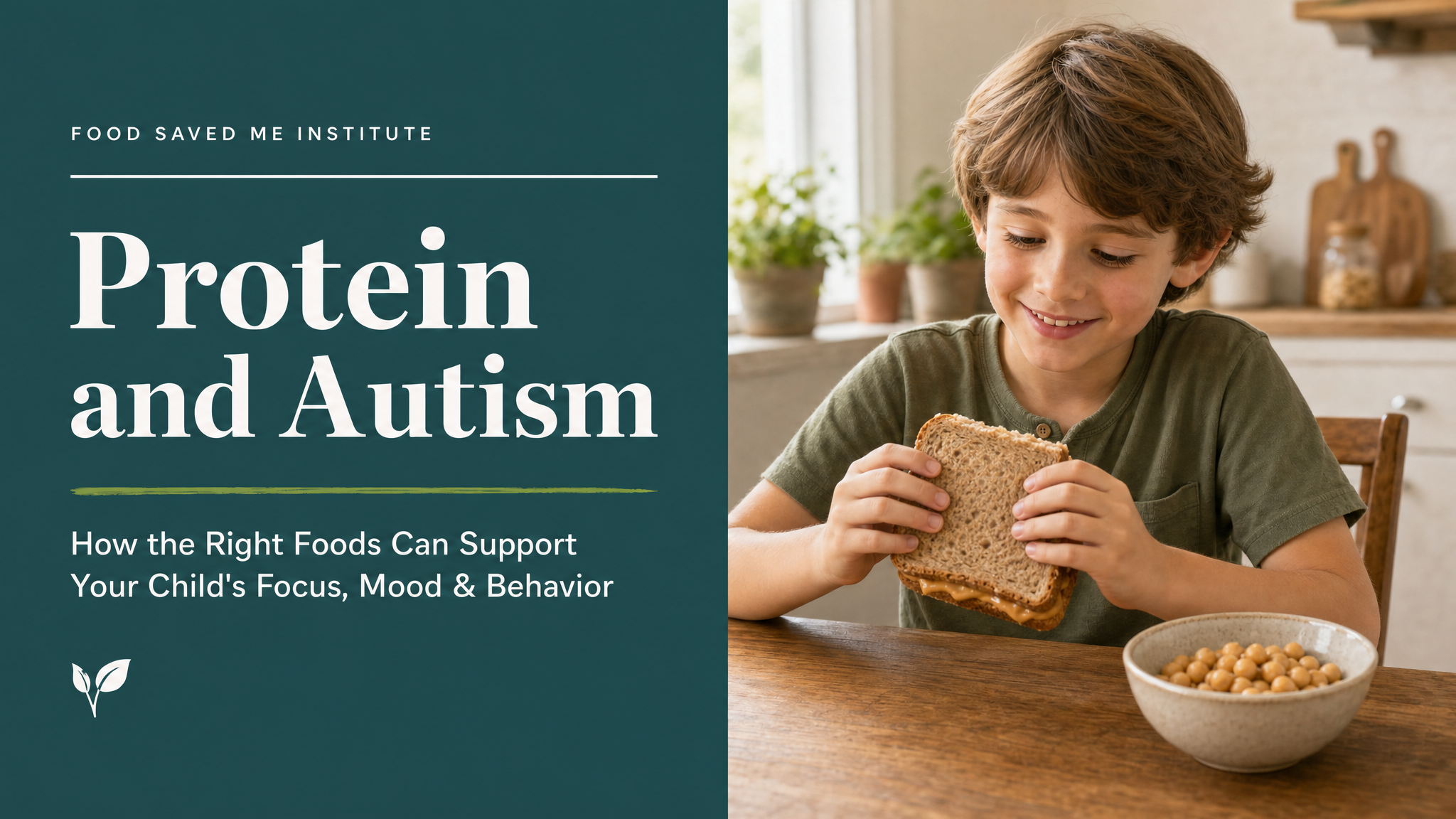
Nut and seed butters (almond, peanut, sunflower seed, tahini): Convenient, kid-friendly sources of protein and healthy fat — and often a hit with kids who have strong texture preferences.
A Sample Day of Brain-Supportive Eating for Kids with Autism
Here’s what a protein-rich, plant-forward day could look like:
Breakfast — Smoothie Bowl Blended banana, berries, and unsweetened almond milk topped with hemp seeds, ground flaxseed, and granola. Quick to make, and a great way to get protein and omega-3s first thing in the morning without a lot of texture challenges.
Mid-Morning Snack — Apple Slices with Nut Butter The fiber in the apple plus the protein and fat in the nut butter keeps blood sugar stable and focus steady. Nut-free option: tahini or pumpkin seed butter.
Lunch — Lentil and Quinoa Veggie Wrap Lentils and quinoa (protein and iron), colorful veggies, hummus or avocado, wrapped in a whole grain tortilla. Can be served deconstructed for kids with texture or food-mixing sensitivities.
Afternoon Snack — Homemade Trail Mix Nuts and seeds with a small amount of dark chocolate chips and dried fruit. Keep it to about a quarter cup to avoid a blood sugar spike.
Dinner — Sweet Potato Buddha Bowl Roasted sweet potato, edamame or chickpeas, leafy greens, and a tahini dressing. Colorful, customizable, and easy to adapt for kids with strong food preferences.
Dessert — Banana Ice Cream Frozen bananas blended until creamy — no added sugar needed. Optional mix-ins: cocoa powder, peanut butter, or cinnamon. A real food treat that still supports the brain and body.
What About Protein Powders?
Whole food sources should always be the foundation. But for some children with autism — particularly those with significant sensory sensitivities around food texture and taste — a high-quality protein powder can help fill gaps.
If you go that route, look for a short ingredient list with no added sugars, artificial flavors, or fillers. Choose complete protein sources such as pea, rice, hemp, or pumpkin seed protein. Always select brands that are third-party tested for heavy metals and contaminants. For kids with sensitive digestion, sprouted or fermented protein powders are easier to process.
Avoid protein powders if your child is already meeting their needs through whole foods, if the powder contains artificial sweeteners that may worsen hyperactivity, or if it’s being used as a meal replacement rather than a supplement.
Small Changes, Real Results
You don’t have to overhaul your child’s diet overnight. The research supports a simple, sustainable approach: gradually shift the balance toward plant-based protein sources and pay attention to what changes.
Maybe it’s swapping a meat-based dinner for a lentil or chickpea dish once a week. Maybe it’s stirring hemp seeds into morning oatmeal. Maybe it’s keeping almond butter and apple slices as the default afternoon snack.
These small steps add up. And when they do, many parents of children with autism notice a little more focus, a little more emotional steadiness, and a little more ease at the table.
What we feed our children isn’t a cure. But it is a lever — and now you know how to use it.