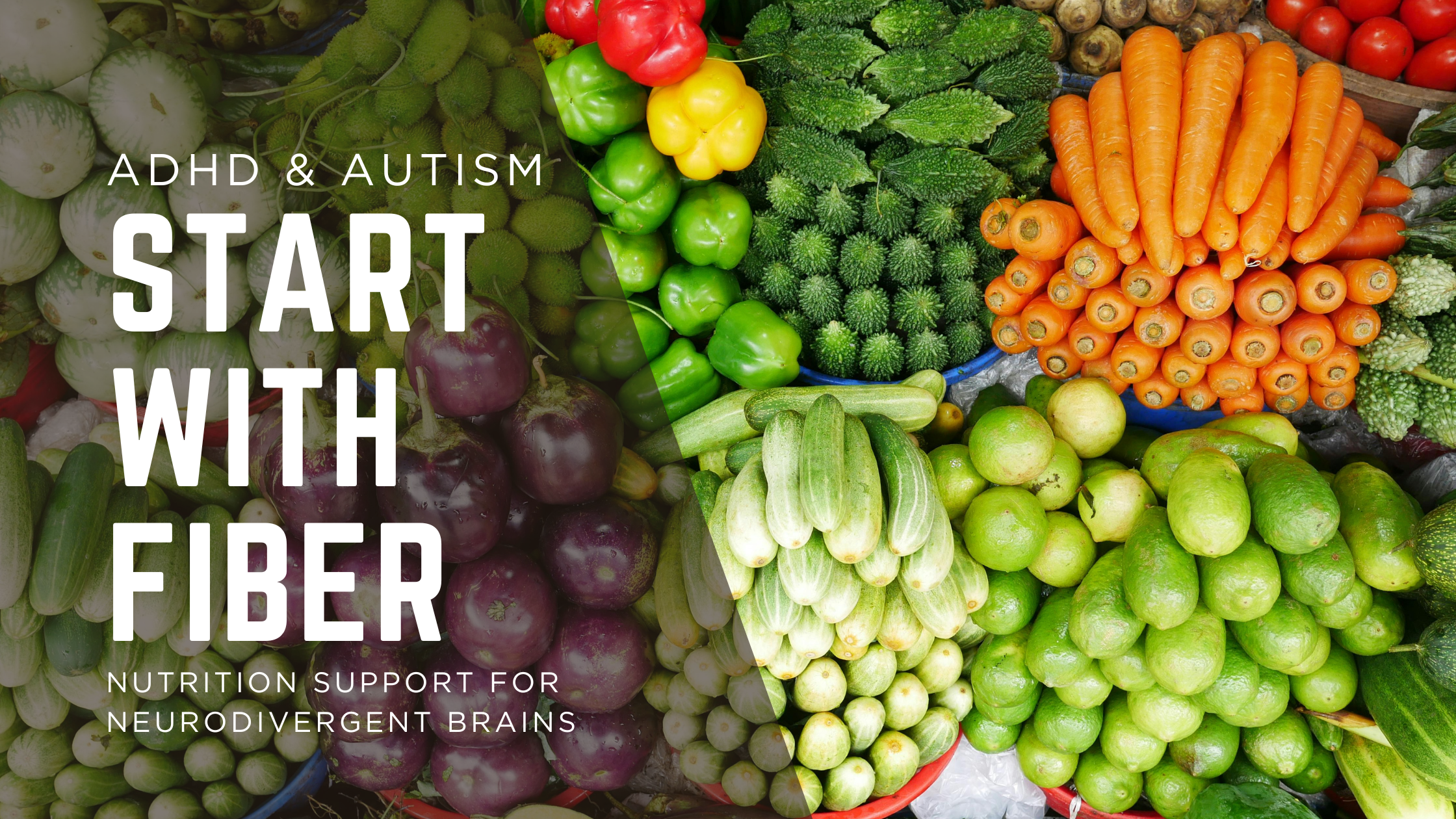
Some days feel manageable. Others feel overwhelming. What’s changing?
If you’re parenting a neurodivergent child, you’ve probably noticed something frustrating: your child can have an amazing day… and then suddenly struggle with focus, meltdowns, irritability, or big emotional swings that seem to come out of nowhere.
Nutrition is not the only factor, and it’s never about “fixing” a child. But nutrition can be a powerful support tool. And one of the most overlooked tools is also one of the simplest:
Fiber.
This article will explain:
- what “neurodivergent” means (in plain language)
- why autism and ADHD are often connected to gut health
- how fiber supports the gut-brain connection
- simple ways to increase fiber for kids (including picky eaters)
What does “neurodivergent” mean?
Neurodivergent is a term used to describe brains that process the world differently than what’s considered “neurotypical.” It includes many differences, but two of the most commonly discussed are:
- Autism (Autism Spectrum Disorder)
- ADHD (Attention-Deficit/Hyperactivity Disorder)
Neurodivergent kids can be incredibly bright, creative, and sensitive. They may also face challenges with things like:
- attention and impulse control
- emotional regulation
- sensory sensitivities (textures, smells, taste)
- sleep
- anxiety or mood swings
- digestive issues (constipation, loose stools, stomach pain)
That last one matters more than most people realize.
The gut-brain connection (and why it matters for autism and ADHD)
The gut and the brain are in constant communication through what’s often called the gut-brain axis. In simple terms:
Your child’s gut can influence their brain, and their brain can influence their gut.
This connection helps explain why many kids with autism or ADHD also deal with gut symptoms, and why supporting digestion can sometimes support behavior, focus, and mood.
It doesn’t mean fiber is a “cure.” It means fiber can be a foundational support because it feeds the gut microbiome, which plays a role in inflammation, neurotransmitter activity, and overall brain function.
What fiber actually is (and why it’s different from other carbs)
Fiber is a type of carbohydrate found only in plant foods. Unlike most carbs, fiber isn’t fully digested. It moves through the stomach and small intestine and reaches the large intestine where it becomes food for beneficial gut bacteria.
There are two main types:
Soluble fiber
- dissolves in water and forms a gel-like texture
- helps feed beneficial gut bacteria
- supports steady blood sugar and cholesterol
Common sources: oats, beans, apples, bananas, citrus, carrots, barley, avocado.
Insoluble fiber
- doesn’t dissolve in water
- adds bulk and helps move waste through the digestive system
- can be especially helpful for constipation
Common sources: vegetables, whole grains, nuts, seeds, potatoes (especially with skin).
You don’t need to track “types.” The goal is to increase fiber overall by eating a variety of whole plant foods.
Why fiber matters for neurodivergent kids
1) Fiber feeds the microbiome (and helps the brain through short-chain fatty acids)
When gut bacteria ferment fiber, they produce compounds called short-chain fatty acids (SCFAs). One of the most studied is butyrate.
Researchers are studying butyrate because it may support:
- a healthier gut lining (important for reducing irritants entering the bloodstream)
- reduced inflammation (including neuroinflammation)
- neurotransmitter support (like serotonin, which is involved in mood regulation)
This matters because many researchers are exploring how gut dysbiosis (an imbalanced microbiome) and low SCFAs show up in children with ADHD and autism. That research is still developing, but the direction is consistent: gut health matters, and fiber is one of the main drivers of gut health.
2) Fiber can support steadier moods and energy
Even outside the gut microbiome, fiber helps slow digestion and supports more stable blood sugar. For some kids, blood sugar ups and downs can look like:
- irritability
- sudden energy crashes
- emotional spikes
- stronger cravings
Fiber won’t solve everything, but it can make the day feel more stable.
3) Fiber helps constipation (a common issue in many kids)
Constipation is common in kids in general, and it’s frequently reported in neurodivergent populations too. When a child is constipated, they may not say “my stomach hurts.” Instead you might see:
- more irritability
- less flexibility
- emotional outbursts
- sleep disruption
Increasing fiber gradually (and increasing fluids) can help.
How much fiber do kids need?
General guidelines often shared in nutrition education:
- Ages 2–3: about 19 g/day
- Ages 4–8: about 25 g/day
- Ages 9–13: about 30 g/day
- Ages 14+: about 35 g/day
Most kids (and adults) get far less than recommended, especially if meals are built around refined grains and packaged snacks.
Where fiber actually comes from (kid-friendly list)
Here’s a simple way to remember it:
If it grows from the ground, it probably has fiber.
High-fiber staples:
- beans and lentils (the fiber “superstars”)
- oats and other whole grains
- berries, apples, oranges, pears
- carrots, cucumbers, broccoli, peas
- potatoes and sweet potatoes (with skin if tolerated)
- chia seeds and ground flax (easy to hide in foods)
- nuts and nut butters (if tolerated)
How to increase fiber without upsetting your child’s stomach
If your child currently eats low fiber and you suddenly add a lot of beans, that can backfire.
Use these two rules:
Rule 1: Go slow
Increase fiber gradually over 2–4 weeks to reduce bloating and gas.
Rule 2: Add water
Fiber needs fluid. If you increase fiber but hydration stays low, constipation can get worse.
Practical ideas for picky eaters (without making food a battle)
Many neurodivergent kids have sensory sensitivities. That’s real. The goal isn’t to force foods. The goal is to build options.
Try “quiet upgrades” that don’t change texture much:
- Blend white beans into pasta sauce (creamy, mild, invisible)
- Add chia seeds to smoothies (start with 1 teaspoon, build up)
- Bake with oat flour + ground flax (muffins, pancakes, waffles)
- Choose oatmeal with berries instead of boxed cereal
- Swap juice for whole fruit (or a smoothie that keeps the fiber)
- Make blended soups (great for getting vegetables in a familiar texture)
One simple win: 1 tablespoon of chia seeds adds about 5 grams of fiber and can be mixed into smoothies, oatmeal, or plant-based yogurt.
What about probiotics?
Fiber is “prebiotic,” meaning it feeds beneficial bacteria. Probiotics are foods that contain live microbes (often fermented foods). Combining both can be helpful for building a healthier gut ecosystem over time.
Kid-friendly probiotic options (small amounts):
- a little sauerkraut juice mixed into a dressing
- small servings of fermented vegetables
- miso soup
- tempeh added to familiar meals
No need to go big. Consistency matters more than intensity.
A gentle safety note
Always talk with your child’s pediatrician (or a qualified clinician) before making major dietary changes, especially if your child has:
- chronic GI issues
- ARFID or very restricted eating
- significant sensory food aversions
- IBS symptoms
Some kids need a slower, more customized approach.
The bottom line
If you’re looking for one nutrition change that’s simple, research-supported, and foundational for the gut-brain connection, start here:
Increase fiber from whole plant foods, slowly and consistently.
For many families, it becomes one of the most practical “first steps” because it supports:
- digestion
- microbiome health
- steadier energy and mood
- fewer swings caused by cravings and blood sugar dips
If your child’s behavior is giving you red flags that something more may be going on beyond typical neurodivergent patterns, our Kids Neurodivergent Nutrition Assessment is a great next step. It helps you see whether nutrition could be a factor and gives you simple ways to create more predictability and calm for your child and your family.
Take the free self-guided assessment here: Quiz.fsminstitute.org